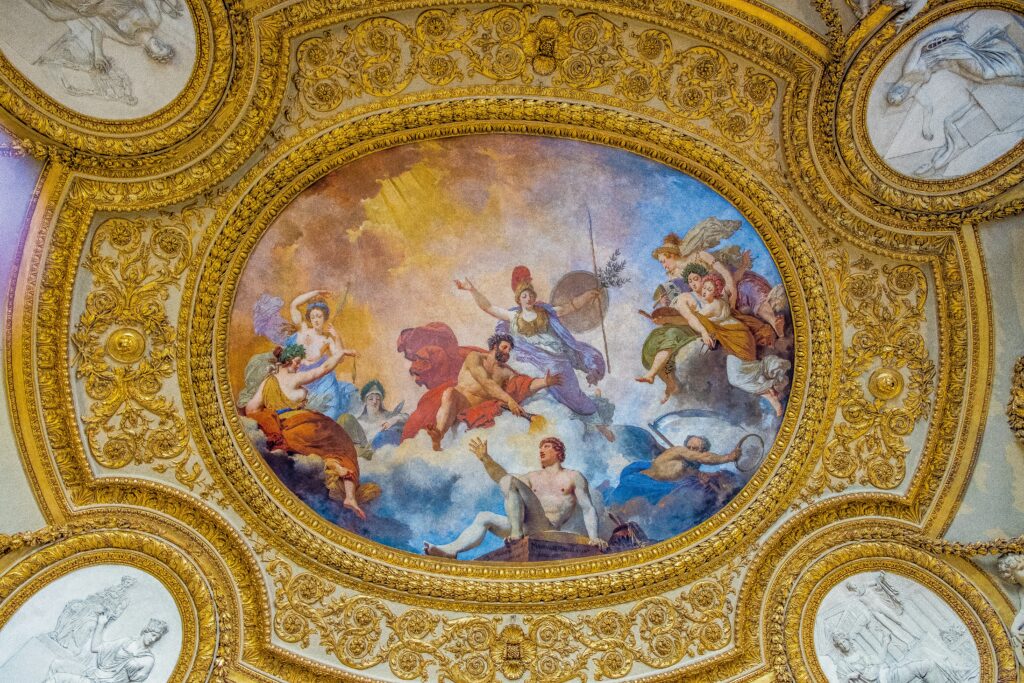
The Louvre’s Enduring Legacy
The Louvre didn’t start as the globe trotting name in art it is today. What began as a medieval fortress in the late 12th century became a royal residence, until revolution turned it into a museum for the public in 1793. Since then, it’s done more than just evolve it’s led. Decades of expansion and curation have made it not just a home to art, but a cornerstone of global culture.
In 2026, the numbers speak louder than marketing slogans. Over 9.6 million visitors walk its halls yearly, making it the most visited museum in the world. Spanning more than 782,000 square feet of exhibition space, the Louvre holds around 35,000 works on display ranging from ancient Mesopotamia to 19th century France. Major digital initiatives and temporary exhibitions with global collaborations keep it from ever feeling stuck in the past.
But beyond size and stats, the Louvre continues to matter because of what it represents: timelessness. Whether it’s the Mona Lisa’s quiet mystery or Delacroix’s chaos in motion, the museum’s lineup cuts across centuries and countries. That’s why it remains a bucket list stop for seasoned art lovers and curious first timers alike. It’s not just a museum it’s a living archive of human expression.
The Mona Lisa and the Power of Mystery
It’s the most famous face in the world and also one of the most misunderstood. Leonardo da Vinci’s “Mona Lisa” still courts speculation and debate, more than 500 years after it was painted. Is she smiling or smirking? Who was the real model? Why is the background so dreamlike? People return to these questions, not because there are clear answers, but because da Vinci engineered mystery right into the brushstrokes. Technically, the piece is a masterclass in sfumato softly blending lines so the viewer focuses on expression, not edges. Emotion sits between shadows. That’s the hook.
Seeing the Mona Lisa in person, though, takes more strategy than you’d expect. It’s housed in the Louvre’s Salle des États, behind bulletproof glass, flanked by crowds and phones in the air. If you want a cleaner look, aim for later afternoons mid week, ideally outside peak travel seasons. Better yet, explore from angles take in the room from the corners, or view it from across the barrier with a zoom lens or even the Louvre’s in app AR magnifier.
Some facts to carry with you: the painting is surprisingly small (77 x 53 cm), and it was stolen in 1911, which ironically helped it become a global icon. Also, some scholars argue the portrait was never finished. Knowing this adds a layer of intimacy as if you’re looking at something eternal and yet incomplete. Just like the smile.
Liberty Leading the People: Romanticism with Grit
Eugène Delacroix’s Liberty Leading the People isn’t just a painting it’s a bold political statement wrapped in Romantic era emotion. Created in 1830, this oil on canvas immortalizes the July Revolution in France, capturing the chaos, courage, and complexity of a nation in flux.
Delacroix’s Political Punch on Canvas
Delacroix didn’t just document history he interpreted it. This piece is a visual response to civil unrest, rendered with passion and symbolism. Rather than a clean or idealized view of revolution, he gives us a gritty, human landscape:
Liberty as a figure is both allegory and leader: bare chested, strong, and undeniably real.
The dead and wounded litter the foreground, reminding viewers of the cost of change.
Parisian landmarks in the background ground the scene in a specific, turbulent moment in history.
Emotion of a Revolution
No static portrait, this painting moves with urgency. Delacroix’s brushwork and theatrical lighting charge the scene with drama:
Swirling smoke, raised weapons, and chaotic movement mirror the unpredictability of revolt.
Figures from different social classes fight side by side, highlighting unity in resistance.
Liberty strides forward, not as a royal or military figure, but as a people’s champion.
This canvas doesn’t just depict revolution it makes you feel its pulse.
Beyond the Flag: Symbols to Notice
While the red, white, and blue tricolor captures attention, a deeper look reveals more layers:
The Phrygian cap on Liberty’s head harkens back to Roman imagery and the ideals of freedom.
The boy holding pistols is said to have inspired characters in Les Misérables representing youthful rebellion.
The fallen soldier in a nightshirt may allude to innocence or the everyman caught in national struggle.
Every figure, background detail, and swirl of color speaks to Delacroix’s vision: revolution as both terror and triumph.
If you’re walking past this painting in the Louvre, stop. Step closer. Let the grit, symbolism, and spirit hit you.
The Coronation of Napoleon: Grandeur Framed
A Monument to Ambition
Painted by Jacques Louis David, The Coronation of Napoleon is not just a grand depiction of a historical event it’s a visual manifesto of power and control. Standing nearly 20 feet tall and over 30 feet wide, this monumental canvas immortalizes Napoleon’s coronation in 1804, capturing every inch of his calculated self image as emperor.
David was Napoleon’s favorite painter, handpicked to document the ceremony
The work emphasizes Napoleon crowning himself a moment that defied tradition
Every element, from lighting to pose, reinforces authority and grandeur
Visual Tour: Layers of Drama
This painting demands a slow read the scene is packed with subtle contradictions, personal drama, and intricate detail.
Look for these key elements:
Center stage: Napoleon places the crown on his own head, sidelining the Pope in a bold gesture of self made power
Josephine’s moment: To the right, the newly crowned Empress kneels, captured with grace and poise
David’s touch: Even David inserts himself into the scene, a quiet signature near the canvas edge, subtly elevating his own role in history
Focus on composition:
Symmetry gives the piece ceremonial weight
Details like glimmering fabrics and golden laurel wreaths evoke Roman emperors
Context Adds Power
Understanding the time period enriches your experience:
Painted in 1805 1807, just after Napoleon’s rise from military general to emperor
Commissioned to legitimize his reign and rival the grandeur of monarchies past
The piece reflects shifting ideas about leadership, meritocracy, and revolutionary France’s complicated aftermath
Visiting in person? Take a moment to step back and absorb the massive scale then lean in to discover how each brushstroke adds to David’s political narrative.
The Raft of the Medusa and the Human Condition
Standing in front of Géricault’s “The Raft of the Medusa” is like taking a punch to the chest. The canvas is enormous almost life sized. You don’t just look at it; you confront it. This isn’t a distant historical scene wrapped in myth and nostalgia. It’s rotting wood, blistered skin, desperation, and dying hope, all pulled brutally into focus.
Painted in 1818 1819, the piece re creates a real shipwreck: the French frigate Méduse ran aground off West Africa, and the poorly handled rescue left over 150 passengers adrift on a makeshift raft. Only 15 survived. Géricault spent months preparing interviewing survivors, studying corpses, even building a full scale model of the raft in his studio. His goal wasn’t dramatization. It was truth. Ugly, raw, unforgettable truth.
The painting hits hard not just because of its scale, but because of what it exposes. The Medusa shipwreck wasn’t just a maritime tragedy it was a political scandal. The captain got his job through connections, not skill. The government’s failings became public through this artwork. Class tension is baked in the powerless were left to die, and Géricault made damn sure they wouldn’t be forgotten.
It’s not an easy painting. But that’s the point. It’s a slow burn of grief, injustice, and endurance. This is the kind of artwork that keeps the Louvre honest: beauty meets pain, and history refuses to be ignored.
Beyond the Classics: What 2026 Visitors Shouldn’t Miss
Most travelers hit the Louvre, snap a photo of the Mona Lisa, then rush on. But if you cut left instead of right, you’ll find wings where quality hides in the quiet.
One such place is the Islamic Art section, tucked in a luminous glass space beneath the Cour Visconti. The craftsmanship mosaic tiles, jewel toned manuscripts, decorated daggers is staggering. Few crowds, just concentrated beauty. Another overlooked gem? The African and Oceanic galleries, where masks, spears, and carved figures remind visitors that world class art thrives far beyond Europe.
What’s also new in 2026 is how you interact with all of it. The Louvre’s AR overlays let you peel back the layers of a painting see a sketch beneath a canvas or zoom into brushwork that defies belief. Audio guides now respond to where you stand, adjusting context based on your angle or focus. You’re not just viewing; you’re navigating stories.
Taking time to explore outside the headline names rewards the patient. Lesser known artists, major histories, fresh digital layers all waiting just off the main circuit.
Want to explore how traditional and modern art spaces compare? Check out Contemporary vs. Classic Art Galleries: What to Expect
Visiting Tips from Art Insiders
The Best Days and Times to Visit in 2026
The Louvre won’t ever be empty but you can make it feel manageable. Wednesdays and Fridays are your best bet in 2026. The museum stays open late those days (until 9:45 PM), so crowds thin out by early evening. If you’re an early bird, aim for just after the 9 AM opening on Tuesdays or Thursdays. Skip weekends unless you enjoy queuing shoulder to shoulder.
Avoid the first Sunday of each month when admission is free; it sounds great, but it turns the place into a maze of camera flashes and stroller traffic. Holidays? Forget it. Aim for off season months like January, March, or early November.
Navigating Like a Pro
Three main entrances choose wisely. Most people flock to the glass Pyramid. It’s cinematic, but it’s also chaos. Go in through the Carrousel du Louvre entrance (via Rue de Rivoli) or the Porte des Lions if it’s open. Security lines move faster, and you’re inside before the crowds know what hit them.
Skip the urge to see everything. Lock in on two or three sections. The Denon Wing has the big names Mona Lisa, The Wedding at Cana, Liberty Leading the People but that also means bottlenecks. If you want breathing space, head to Sully or Richelieu for sculpture, ancient artifacts, or quieter painting galleries.
Guided tours are worth it if you’re short on time. They cut the noise and sharpen the focus. Audio guides are solid too, and the Louvre’s official app got a serious upgrade for 2026, with live maps and self curated routes.
How to Avoid “Art Fatigue”
The Louvre is massive. Over 35,000 works on display and that’s just what’s out. You don’t need to see it all. Plan for short, intentional visits. Two, maybe three hours max. Take breaks. Grab a coffee in the Café Richelieu or step out into the Cour Napoléon. Hydrate. Sit down. Look up (the ceilings are art too).
Strong strategy: theme your visit. One day for French Romanticism. Another for ancient Egyptian pieces. Maybe a run on iconic women in art. Narrow focus equals higher satisfaction.
Last tip? Don’t make it a checklist. Let yourself linger. That’s where the real connection happens.
 Kaelith Zelthanna is the kind of writer who genuinely cannot publish something without checking it twice. Maybe three times. They came to art trends and movements through years of hands-on work rather than theory, which means the things they writes about — Art Trends and Movements, Painting Techniques and Tutorials, Art Gallery Highlights, among other areas — are things they has actually tested, questioned, and revised opinions on more than once.
That shows in the work. Kaelith's pieces tend to go a level deeper than most. Not in a way that becomes unreadable, but in a way that makes you realize you'd been missing something important. They has a habit of finding the detail that everybody else glosses over and making it the center of the story — which sounds simple, but takes a rare combination of curiosity and patience to pull off consistently. The writing never feels rushed. It feels like someone who sat with the subject long enough to actually understand it.
Outside of specific topics, what Kaelith cares about most is whether the reader walks away with something useful. Not impressed. Not entertained. Useful. That's a harder bar to clear than it sounds, and they clears it more often than not — which is why readers tend to remember Kaelith's articles long after they've forgotten the headline.
Kaelith Zelthanna is the kind of writer who genuinely cannot publish something without checking it twice. Maybe three times. They came to art trends and movements through years of hands-on work rather than theory, which means the things they writes about — Art Trends and Movements, Painting Techniques and Tutorials, Art Gallery Highlights, among other areas — are things they has actually tested, questioned, and revised opinions on more than once.
That shows in the work. Kaelith's pieces tend to go a level deeper than most. Not in a way that becomes unreadable, but in a way that makes you realize you'd been missing something important. They has a habit of finding the detail that everybody else glosses over and making it the center of the story — which sounds simple, but takes a rare combination of curiosity and patience to pull off consistently. The writing never feels rushed. It feels like someone who sat with the subject long enough to actually understand it.
Outside of specific topics, what Kaelith cares about most is whether the reader walks away with something useful. Not impressed. Not entertained. Useful. That's a harder bar to clear than it sounds, and they clears it more often than not — which is why readers tend to remember Kaelith's articles long after they've forgotten the headline.