What Makes These Artists Stand Out
Contemporary art isn’t resting on old brushstrokes. It’s pushing limits sometimes literally. The artists showcased this month are rewriting what a canvas or installation can be. Think sensor reactive pigment, AR woven collage, biodegradable sculpture. Mediums are merging, breaking, and rebuilding themselves to match the complexity of the times.
Themes sit heavy in 2024. Climate fatigue, cultural hybridization, digital overload they’re all playing out across these works. You’ll see quiet grief encoded in code, architecture turned into metaphor, waste repurposed into protest. These artists are tuning into the cultural pulse, and they’re not whispering.
Exhibitions from New York to Nairobi are noticing. What used to be niche tech art, diasporic memoryscapes, glitch based expression now commands attention in both hyperlocal galleries and global art fairs. These creators aren’t just participating in the conversation. They’re steering it.
Lianne Wexler Intuitive Abstraction
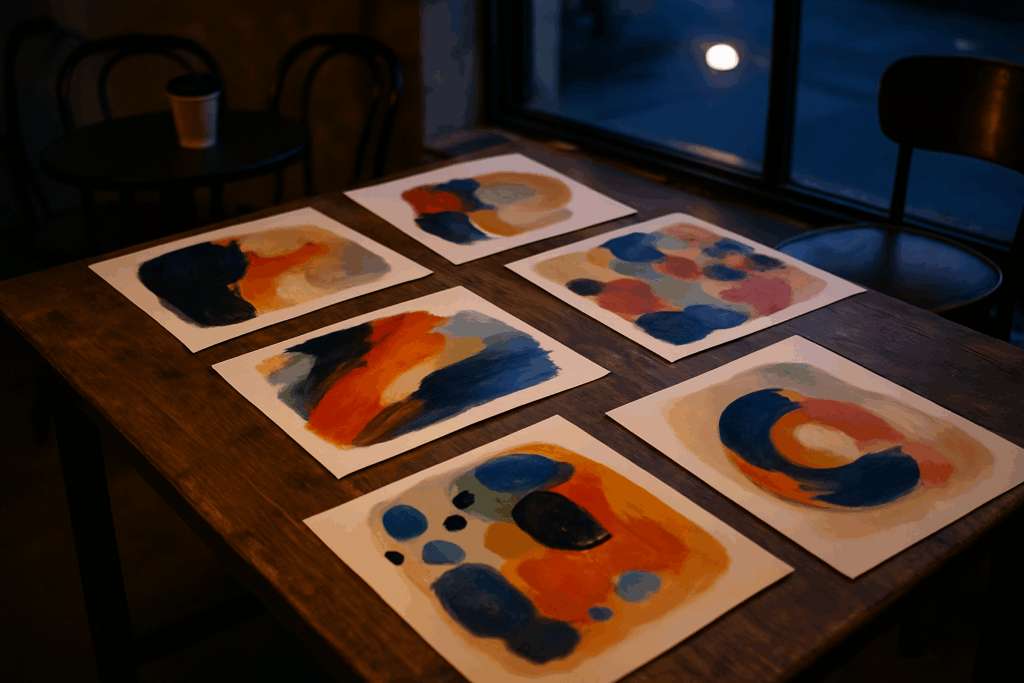
Lianne Wexler’s current body of work leans into contradiction: structured yet instinctual, layered but raw. Her use of acrylic textures at times dense, at times almost translucent is intertwined with organic elements like dried leaves, sand, and reclaimed wood pulp. Nothing here is overly polished. But that’s the point.
Her canvases function more like tactile memory maps than decorative objects. Each piece seems to dig for something half remembered a place, a smell, a feeling and holds it just long enough for viewers to trace their own connection. It’s less narrative, more sensation: intuition guiding form.
The healing aspect is subtle but present. Wexler never claims to be a therapist with a paintbrush, but her work gives space. Space to feel uncertain, to get a little lost, to come back different. This month, her pieces are part of a quietly arresting group exhibition at the featured art gallery—a fitting match for work that resists the loud and leans fully into the inner world.
Mateo Cruz Urban Isolation in Digital Form
Blending Mediums: Analog Meets Augmented Reality
Mateo Cruz is redefining how we view mixed media. His work incorporates layered collages constructed from print, debris, and urban textures then enhanced through augmented reality. Viewers use their phones to activate hidden animations, bringing static images to life.
Mixed media collages embedded with AR technology
Analog foundations reimagined digitally
Each piece changes with perspective and interaction
Themes: The Quiet Tension of City Living
Cruz’s pieces are deeply rooted in the emotional fallout of urban life. He builds visual narratives around themes of overstimulation, loneliness, and the psychological weight of modern architecture.
Exploration of urban alienation
Contrasts between public chaos and internal stillness
Challenges traditional depictions of city landscapes
Impact: Digitizing the Gallery Experience
While tech art can often feel distant, Cruz brings digital elements into physical spaces with intention. His work doesn’t live just online it bridges the gap, inviting tactile experience while pushing the viewer toward digital immersion inside traditional galleries.
Recognized for merging AR with analog gallery spaces
Breaking down the barrier between screen and canvas
A key figure in the evolution of digital art curation
Reiko Tanaka Glitch in Nature
Reiko Tanaka doesn’t paint in the traditional sense she codes, she inks, and she listens to the brain. Her work starts with sumi e, Japan’s ancient style of ink painting. But then she layers it with generative algorithms fed by neurological data: real EEG scans turned into visual code. What emerges is a strange harmony branches and landscapes that ripple like static, patterns that stutter like digital memories.
Tanaka’s process is direct, almost surgical. She recodes nature one data point at a time, asking what it means to see the world not through the eyes, but through a nervous system. The result? A hybrid canvas where the organic and the synthetic don’t clash they sync. Her latest showcase is already making waves across the tech art scene, marking her as one to watch.
It’s not about the glitch it’s about what the glitch reveals.
Nkosinathi Molefe Afro Futurist Retellings
Nkosinathi Molefe doesn’t make easy art. His sculptural work is dense layered in both material and meaning. Drawing on African folklore, black identity, and quantum theory, Molefe builds pieces that pull from the past and launch toward the future. Bronze bones protrude from data etched acrylic. Clay masks float above magnetic levitation plates. These aren’t just installations they’re portals.
Every element he uses has a story. But it’s not just for visual effect. Molefe’s work is a statement and sometimes a protest about displacement, resilience, and the science of our shared humanity. It’s political, but never preachy. Personal, but not closed off.
His presence in this month’s rotation at the featured art gallery feels like a win, not just for Molefe, but for contemporary sculpture as a medium that still has a lot to say and new ways to say it.
Clara Dunn Intimate Spaces in Monochrome

Clara Dunn doesn’t shoot cities. She shoots silence. Her large scale monochrome photography strips the world down to contrast, structure, and stillness. These aren’t just photos they’re environments emptied of noise. Stark shadows crawl across forgotten stairwells, narrow hallways stretch longer than they should, and negative space carries more emotional weight than what’s left in frame.
Her work revolves around architectural solitude. Office towers, fire escapes, concrete slabs things we walk past without thought. Clara isolates them, redefines their angles, and forces the viewer to slow down. There’s no color to distract. No gloss. Just form and breath.
It’s exactly this restraint that curators can’t stop talking about. Minimalist, but heavy with atmosphere, Clara’s portfolio has found a quiet kind of fame. In a culture obsessed with fast and loud, her photos whisper. And they linger.
Jules Marin The Aggression of Color
Jules Marin doesn’t ease into your line of sight he ambushes it. The work hits hard with high impact pigments poured, slashed, and blistered across metal and acrylic panels. These aren’t quiet studies in color theory. They’re raw emotional broadcasts, often bordering on visual overload. But the chaos is disciplined. Every fracture, pool, and glare works in service of an unmistakable message: we’re not okay and neither is the world around us.
Marin’s palette is confrontational. Reds that twitch. Yellows that burn. Blues that collapse in on themselves. It’s less about painting and more about provocation. You don’t look at a Marin; you endure it. This unapologetic approach has drawn frequent comparisons to early Gerhard Richter, particularly Richter’s transition from photorealism to abstraction, but Marin’s version is more feral, more anxious. Think Richter if he swapped the brush for a crowbar.
What stands out isn’t just the intensity, but the intent. Marin distills postmodern unease identity blur, algorithmic pressure, climate fatigue into pigment and pressure. The materials are industrial, the emotion anything but. No captions needed. The painting says what the timeline won’t.
Ezra Park Disposable Culture, Reimagined
Ezra Park doesn’t shout. His assemblages do that for him. Made entirely from items rescued out of recycling bins and dollar store gutters, his work turns fast discarded objects into tight, deliberate structures. Each piece is part sculpture, part time capsule holding a mirror up to the speed at which we consume and forget.
The forms aren’t traditionally beautiful. They’re held together by zip ties, plastic wrap, stickers still half peeled. But that’s intentional. Park’s art critiques the way we blur durability with disposability. A McDonald’s straw or off brand phone case isn’t just trash it’s a timestamp.
What makes his message cut through is restraint. There’s no loud captioning, no moralizing wall text. You walk into the room and the silence makes the chaos even louder. Park’s work reminds us: the waste is ours. He’s just rearranged it.
Norah Singh Language of Layered Identity
Norah Singh’s work doesn’t just hang it resonates. Her pieces stitch together tapestry, printmaking, and embedded sound, creating art that isn’t meant to be passively viewed. Each element whether a woven thread or a fragment of audio is selected to reflect a complex inner landscape shaped by heritage, displacement, and cultural transformation.
Singh’s focus on identity and migration isn’t an abstract concept it’s visceral. You feel it in the density of her weaves, the archival prints folded into fabric, the distant voices echoing from embedded speakers. There’s craftsmanship, yes, but also narrative. Her installations serve as living documents quiet but loaded. They map personal history against collective memory, without leaning into spectacle.
In an art world crowded with noise, Singh’s layered subtlety cuts through. You don’t just look at her work. You listen, remember, and, if you’ve felt dislocated in any way, you recognize something of yourself in it.
Diego Navarro Motion in Still Life
At first glance, Diego Navarro’s paintings are restrained, almost inert. But bring them to life literally with motion activated lighting, and hidden scenes begin to flicker into view. He’s using pigment tech that responds to shifting angles and light exposure, creating work that refuses to be still. What looks like a quiet landscape bursts into action. A blurred subway platform suddenly reveals a human figure mid leap, stuck between arriving and vanishing.
Navarro isn’t just playing with gimmicks. His pieces are meditations on missed moments and temporal slippage the things we miss in our rush, the truths hidden in the corners of our awareness. He captures the tension between what’s always there and what’s only visible when you’re paying close enough attention. In a gallery lit just right, the viewer becomes the activator, turning on both the image and its meaning.
Lena Varga Metamorphic Canvases
Lena Varga doesn’t paint on canvas she builds it. Her latest series uses thermochromic surfaces that respond to the environment. Colors bloom with warmth, fade with cold. Shapes morph as if remembering something not quite gone. It’s paint that doesn’t sit still.
But this isn’t a gimmick. It’s a slow meditation on time and perception. Viewers don’t just observe her work they participate. Walk near it, breathe near it, and it changes. Then it changes again. There’s no final form, no fixed moment to grasp. In a world obsessed with permanence, Varga’s work asks you to let that go.
She draws from Eastern philosophy and post minimalist aesthetics, but keeps the tone grounded. There’s rawness here. A piece might look one way in the morning, another by night. Her work lives in flux, and that’s the point. In an art world chasing trends, Varga’s canvases quietly insist that nothing stays the same, and maybe that’s beautiful.
Why It Counts
What sets these ten apart isn’t just their technique it’s how they stretch the concept of what art can be. They aren’t replicating; they’re reinventing. Working across code, climate responsive materials, forgotten formats, and sensory layers, these artists provoke something far beyond visual appeal. They add pressure to the medium itself.
Pay attention now, and you’re not just catching the next trend you’re getting in early on the artists who will define the next decade. Their work is already showing up in gallery corners, collector conversations, and art school syllabi. They’ve got traction, but they haven’t become inaccessible yet.
Most of them are still reachable: posting behind the scenes process videos, replying to DMs, or uploading artist statements to low traffic corners of the internet. If there’s ever a time to engage buy, write, ask, share it’s now.
 Lacy Cisnerosity is the kind of writer who genuinely cannot publish something without checking it twice. Maybe three times. They came to art gallery highlights through years of hands-on work rather than theory, which means the things they writes about — Art Gallery Highlights, Creative Process Insights, Painting Techniques and Tutorials, among other areas — are things they has actually tested, questioned, and revised opinions on more than once.
That shows in the work. Lacy's pieces tend to go a level deeper than most. Not in a way that becomes unreadable, but in a way that makes you realize you'd been missing something important. They has a habit of finding the detail that everybody else glosses over and making it the center of the story — which sounds simple, but takes a rare combination of curiosity and patience to pull off consistently. The writing never feels rushed. It feels like someone who sat with the subject long enough to actually understand it.
Outside of specific topics, what Lacy cares about most is whether the reader walks away with something useful. Not impressed. Not entertained. Useful. That's a harder bar to clear than it sounds, and they clears it more often than not — which is why readers tend to remember Lacy's articles long after they've forgotten the headline.
Lacy Cisnerosity is the kind of writer who genuinely cannot publish something without checking it twice. Maybe three times. They came to art gallery highlights through years of hands-on work rather than theory, which means the things they writes about — Art Gallery Highlights, Creative Process Insights, Painting Techniques and Tutorials, among other areas — are things they has actually tested, questioned, and revised opinions on more than once.
That shows in the work. Lacy's pieces tend to go a level deeper than most. Not in a way that becomes unreadable, but in a way that makes you realize you'd been missing something important. They has a habit of finding the detail that everybody else glosses over and making it the center of the story — which sounds simple, but takes a rare combination of curiosity and patience to pull off consistently. The writing never feels rushed. It feels like someone who sat with the subject long enough to actually understand it.
Outside of specific topics, what Lacy cares about most is whether the reader walks away with something useful. Not impressed. Not entertained. Useful. That's a harder bar to clear than it sounds, and they clears it more often than not — which is why readers tend to remember Lacy's articles long after they've forgotten the headline.